Sweet Sensation: Baking the Perfect Honey Cake
Few desserts feel as comforting and nostalgic as a warm slice of honey cake. With its soft crumb, golden color, and naturally sweet flavor, this classic treat has been loved in kitchens around the world for generations. Whether served with afternoon tea, enjoyed as a holiday dessert, or baked simply for the joy of homemade treats, honey cake brings warmth and sweetness to every occasion.
What makes this honey dessert recipe so special is the balance of rich honey flavor, gentle spices, and a moist texture that stays tender for days. Unlike overly sugary cakes, honey cake delivers a deeper, more complex sweetness that feels both indulgent and comforting.
If you’re looking for a moist honey cake, this recipe delivers exactly that. It’s simple enough for beginners yet delicious enough to impress guests. With pantry-friendly ingredients and easy steps, this easy honey cake recipe is perfect for anyone who loves baking from scratch. Once you taste this homemade honey cake, it may quickly become one of your favorite desserts.
What Is Honey Cake? A Sweet Tradition with a Rich History
Honey cake is one of the oldest desserts in the world, and its roots stretch back thousands of years. Long before refined sugar became common, honey was the primary sweetener used in baking. Ancient civilizations such as the Egyptians, Greeks, and Romans all used honey in breads and cakes, creating early versions of what we now call traditional honey cake.
Today, honey cake appears in many cultures, each with its own unique twist. One of the most well-known versions is the Jewish honey cake recipe, often served during Rosh Hashanah, the Jewish New Year. In this tradition, honey symbolizes hope for a sweet year ahead, making the cake both meaningful and delicious.
Another famous variation is the Russian honey cake, known as Medovik. This beautiful dessert features multiple thin honey-flavored cake layers filled with creamy frosting, creating a rich and elegant treat loved across Eastern Europe.
Across Europe and the Middle East, honey cakes appear in many forms—from spiced loaf cakes to delicate pastries. Some include nuts, citrus zest, or dried fruits, while others highlight the pure flavor of honey.
Despite these variations, the heart of every classic honey dessert remains the same: natural sweetness, warm spices, and a tender, comforting texture.
Why This Honey Cake Recipe Works So Well
A great honey cake should be flavorful, moist, and easy to prepare—and that’s exactly what this recipe delivers. Unlike complicated desserts that require special techniques, this moist honey cake recipe uses simple ingredients and straightforward steps that even beginner bakers can follow.
One of the biggest reasons this cake works so well is the natural sweetness of honey. Instead of relying entirely on sugar, honey adds both flavor and moisture, creating a cake that tastes rich without being overly sweet.
The texture is another highlight. The combination of eggs, oil, and honey produces a soft, tender crumb that stays moist for days. This makes the cake perfect for baking ahead of time for gatherings, holidays, or family desserts.
Another advantage is simplicity. Most ingredients are already in your pantry, making this an easy homemade honey cake that you can prepare without a special shopping trip.
Tip: Honey naturally attracts and holds moisture, which helps the cake stay soft longer than many traditional cakes.
If you’re searching for a simple honey cake that tastes incredible without requiring advanced baking skills, this recipe is a wonderful place to start.
Key Ingredients for the Best Homemade Honey Cake
Creating the perfect honey cake starts with understanding the ingredients and how they work together. Each component plays a role in producing a cake that is soft, flavorful, and beautifully balanced.
Honey – The Star Ingredient in Honey Cake
As the main flavor in this dessert, honey brings much more than sweetness. It adds depth, warmth, and a subtle floral aroma that makes honey cake ingredients truly unique.
Because honey contains natural sugars and moisture, it helps create a cake that stays tender and soft. The flavor can vary depending on the type of honey used, ranging from mild and light to deep and robust.
Flour – The Structure of a Soft Honey Cake
Flour forms the structure of the cake and supports the moist ingredients.
Most honey cake recipes use all-purpose flour, which provides a balanced texture that is soft but sturdy. However, cake flour can also be used for a lighter crumb if desired.
Measuring flour correctly is important for the final texture. Too much flour can make the cake dense, while the right amount keeps it light and tender.
Eggs, Sugar, and Oil
These ingredients work together to create richness and stability in the batter.
Eggs provide structure and help bind the ingredients together. Sugar enhances sweetness and contributes to the cake’s golden color during baking. Oil adds moisture, helping the cake stay soft even after several days.
Together, these ingredients create the smooth batter that produces a delicious homemade cake.
Warm Spices That Enhance Honey Flavor
One of the most appealing aspects of honey cake is the gentle warmth from aromatic spices. These flavors complement the sweetness of honey without overpowering it.
Common spices for honey cake include:
-
Cinnamon
-
Nutmeg
-
Cloves
-
Ginger
These spices add complexity and make the cake feel comforting and festive. Many bakers love experimenting with spice blends when baking with honey to create unique flavor profiles.
Choosing the Right Honey for Baking Honey Cake
The type of honey you use can have a noticeable impact on the flavor of your cake. While any honey will work, different varieties bring their own character to the dessert.
Lighter honeys, such as clover honey, have a mild and delicate flavor. They produce a cake that is sweet but subtle, making them a great choice if you prefer a gentle honey taste.
Wildflower honey offers a more complex flavor because it comes from a mix of flowers. This type often adds floral notes that enhance the richness of the cake.
For a stronger taste, buckwheat honey provides a dark color and bold flavor. It creates a deeper, more intense honey cake that many experienced bakers enjoy.
When choosing the best honey for baking, consider how strong you want the honey flavor to be. Lighter honeys create delicate desserts, while darker varieties produce richer cakes.
Some bakers also enjoy baking with raw honey, which preserves natural flavor compounds and adds a slightly more complex taste.
Essential Kitchen Tools for Baking Honey Cake
While honey cake is simple to prepare, using the right baking tools for cakes helps ensure consistent and successful results.
A few basic tools make the process smooth and enjoyable.
You’ll need mixing bowls for combining wet and dry ingredients, as well as measuring cups and spoons to ensure accuracy. An electric mixer or whisk helps blend the batter until smooth and evenly mixed.
For baking, a loaf pan or round cake pan works perfectly depending on your preferred presentation. Finally, a cooling rack allows the cake to cool evenly, preventing the bottom from becoming soggy.
These simple pieces of essential baking equipment help create a cake with the ideal texture and structure.
Step-by-Step Guide: How to Make Honey Cake from Scratch
Making honey cake is surprisingly easy, and the process follows the same basic steps used in many classic cake recipes.
Step 1 – Prepare the Cake Batter
Begin by mixing the wet ingredients together in a large bowl. Combine honey, eggs, sugar, oil, and any liquid ingredients until the mixture becomes smooth and well blended. This step ensures that the honey distributes evenly throughout the batter.
Step 2 – Combine Dry Ingredients
In a separate bowl, whisk together the flour, baking powder, and spices. Mixing the dry ingredients separately helps distribute the spices evenly and prevents clumping when added to the batter.
Step 3 – Fold Dry Ingredients into the Batter
Gradually add the dry mixture to the wet ingredients, stirring gently until just combined.
Tip: Overmixing can make the cake dense instead of soft and tender. Mix only until the batter becomes smooth.
Step 4 – Pour Batter into Prepared Pan
Transfer the batter into a greased or lined cake pan. Spread it evenly so the cake bakes uniformly.
Step 5 – Bake Until Golden and Fragrant
Place the cake in a preheated oven and bake until the surface becomes golden and the kitchen fills with a warm honey aroma.
To check doneness, insert a toothpick into the center of the cake. If it comes out clean or with a few crumbs, the cake is ready.
Following these honey cake baking steps helps ensure your homemade honey cake recipe turns out soft, moist, and beautifully baked every time.
How to Tell When Honey Cake Is Perfectly Baked
Knowing when your cake is fully baked is key to achieving the perfect texture. Overbaking can make the cake dry, while underbaking leaves the center too soft.
A properly baked honey cake will have a golden brown surface and a slightly domed top. The edges should look set, while the center feels springy when lightly pressed.
The most reliable method is the toothpick test. Insert a toothpick into the middle of the cake. If it comes out clean or with only a few crumbs attached, the cake is ready to come out of the oven.
You’ll also notice a rich honey aroma filling your kitchen, which is another good sign that the cake is baked perfectly.
Allow the cake to cool before slicing so the texture sets properly. Taking the time to bake it just right ensures every slice of your honey cake is moist, tender, and full of flavor.
Delicious Honey Cake Variations to Try
One of the reasons honey cake has remained popular for centuries is its incredible versatility. Bakers around the world have created unique versions of this dessert by adding different spices, nuts, citrus flavors, or creamy layers. These honey cake variations allow you to customize the cake based on your taste preferences or the occasion.
Classic Jewish Honey Cake
A classic Jewish honey cake is perhaps the most traditional version of this dessert. Often served during Rosh Hashanah, it symbolizes hope for a sweet new year. This cake is typically dense and deeply flavored with warm spices such as cinnamon, cloves, and nutmeg.
Many recipes also include coffee or orange juice, which enhances the flavor and helps balance the sweetness of the honey. The result is a moist, fragrant cake that pairs beautifully with tea or coffee.
Russian Honey Layer Cake (Medovik)
The famous Russian honey cake, known as Medovik, takes honey cake to another level. Instead of a single cake layer, this dessert features multiple thin honey-flavored layers stacked with a creamy filling, usually made from sour cream or condensed milk.
Over time, the layers absorb the cream and become incredibly soft, creating a delicate and luxurious texture. Medovik is a favorite in Eastern Europe and is widely admired for its beautiful layered presentation.
Honey Almond Cake
For a slightly nutty twist, almond honey cake is a fantastic variation. Almond flour or sliced almonds add both flavor and texture to the cake.
The mild nuttiness complements the sweetness of honey perfectly. Some bakers also add almond extract for extra aroma, making this version particularly rich and satisfying.
Orange Honey Cake
If you enjoy bright citrus flavors, orange honey cake is a refreshing variation. Adding orange zest or a splash of fresh orange juice brings a light, fragrant flavor that balances the sweetness of the honey.
This variation is especially popular in Mediterranean-style desserts, where citrus and honey are often paired together.
Honey Walnut Cake
Another delicious option is honey walnut cake. Chopped walnuts add a pleasant crunch and earthy flavor that contrasts nicely with the soft crumb of the cake.
This version is perfect for autumn and winter baking when warm, nutty flavors feel especially comforting.
Best Frostings and Toppings for Honey Cake
While honey cake is delicious on its own, adding a topping or frosting can elevate it into a truly memorable dessert. There are many honey cake frosting ideas that complement the natural sweetness of the cake.
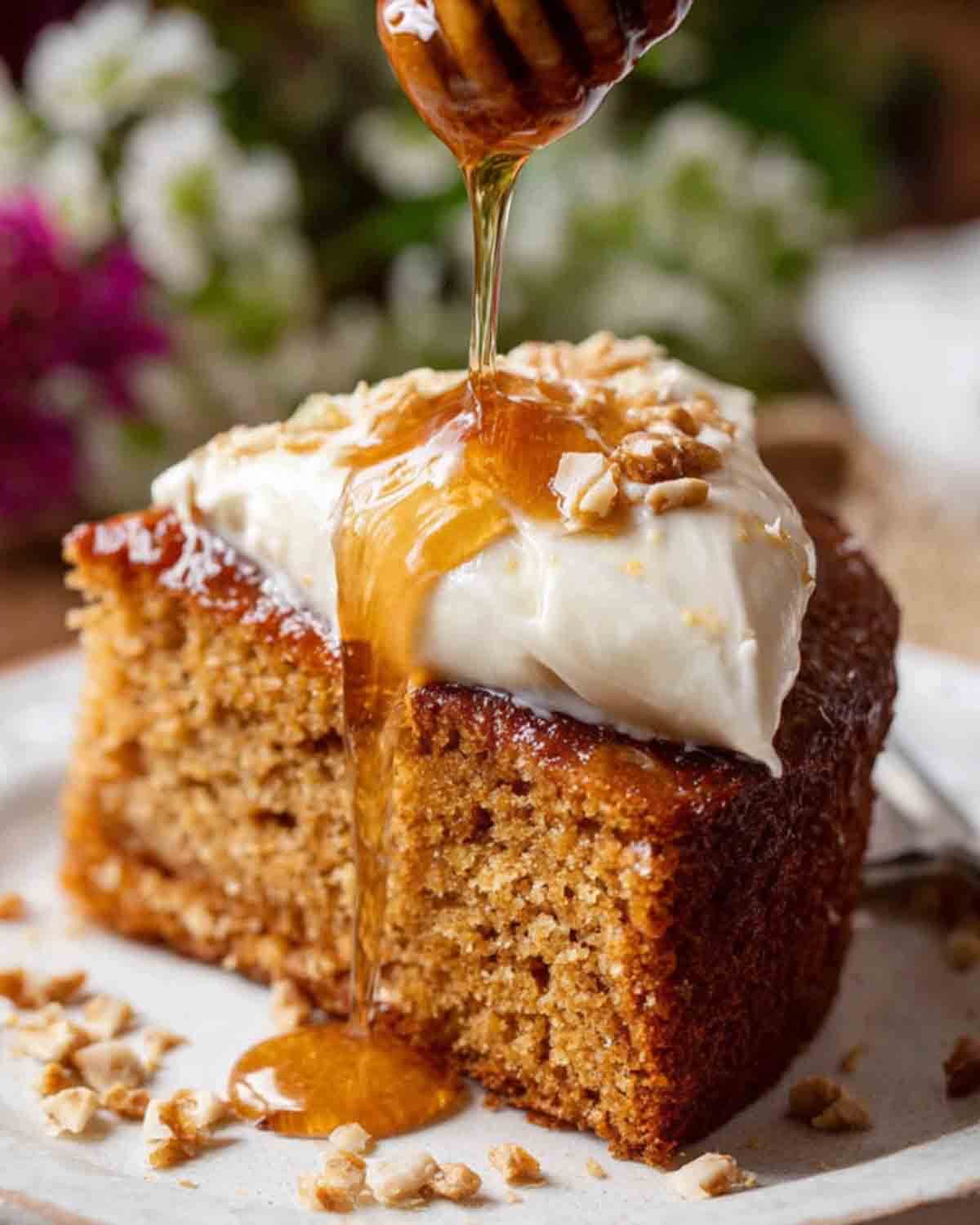
A popular option is cream cheese frosting, which adds a tangy contrast to the sweet honey flavor. The creamy texture pairs beautifully with the soft crumb of the cake.
For a lighter topping, whipped cream is a great choice. Its airy texture balances the richness of the cake without overpowering the honey flavor.
Another simple option is a honey glaze for honey cake. A warm glaze made from honey and powdered sugar creates a glossy finish while intensifying the honey taste.
Some bakers prefer to keep things minimal with a light dusting of powdered sugar, which adds sweetness without covering the cake’s natural flavor.
You can also enhance the presentation with toppings such as:
-
toasted almonds or walnuts
-
fresh berries
-
a light caramel drizzle
These additions add texture and visual appeal while keeping the focus on the cake itself.
How to Serve Honey Cake for Maximum Flavor
Serving honey cake properly can make a noticeable difference in both flavor and texture. While the cake is delicious right after baking, many bakers believe it tastes even better after resting for several hours.
One classic way to enjoy honey cake is slightly warm with a cup of tea or coffee. The warmth enhances the honey aroma and makes the cake feel even more comforting.
For a richer dessert, try serving honey cake with vanilla ice cream. The creamy ice cream melts slightly over the cake, creating a wonderful contrast of temperatures and textures.
Another simple serving idea is topping the cake with Greek yogurt or lightly whipped cream, which adds a tangy balance to the sweetness.
Interestingly, many people say honey cake tastes best the next day. Allowing the cake to rest overnight helps the flavors deepen and blend together, resulting in an even more delicious dessert.
How to Store Honey Cake (And Keep It Moist)
One of the advantages of honey cake is that it stores very well. Because honey naturally retains moisture, the cake often stays soft longer than many other baked goods.
Room Temperature
To store the cake at room temperature, place it in an airtight container or wrap it tightly with plastic wrap. When stored properly, honey cake can stay fresh for 3 to 4 days.
Refrigeration
If you need to keep it longer, refrigeration is a good option. Store the cake in a sealed container in the refrigerator, where it can last up to one week.
Freezing Honey Cake
For long-term storage, freezing honey cake works beautifully. Slice the cake first, then wrap each slice individually in plastic wrap and place them in a freezer-safe bag.
Frozen honey cake can be stored for up to three months. Simply thaw slices at room temperature before serving.
Expert Baking Tips for the Best Honey Cake Every Time
A few simple techniques can make a big difference when baking honey cake. These honey cake baking tips help ensure your cake turns out moist, flavorful, and perfectly textured every time.
Tip: Use room temperature eggs.
Room temperature ingredients blend more easily, resulting in a smoother batter and more even texture.
Tip: Choose darker honey for deeper flavor.
While mild honey works well, darker varieties such as buckwheat honey create a richer taste.
Tip: Let the cake rest overnight.
Like many spice cakes, honey cake develops even better flavor after sitting for several hours.
Tip: Avoid overbaking.
Overbaking is one of the most common mistakes when baking honey cake. Because honey caramelizes quickly, the cake can dry out if left in the oven too long.
Tip: Measure flour carefully.
Too much flour can make the cake dense. For the best results, measure flour using the spoon-and-level method.
Following these moist cake tips will help you bake a honey cake that is tender, fragrant, and consistently delicious.
Honey Cake Nutrition and Benefits of Baking with Honey
Honey cake offers more than just wonderful flavor. One advantage of baking with honey is that it provides natural sweetness while adding subtle complexity to desserts.
Honey contains small amounts of antioxidants and trace nutrients, which can contribute to its unique flavor profile. While it is still a sweet ingredient and should be enjoyed in moderation, many bakers appreciate honey as a natural alternative to refined sugar.
Another benefit of honey in baking is its ability to retain moisture, which helps cakes stay soft for longer periods. This is one reason honey cakes often taste even better a day or two after baking.
FAQs
Why is honey cake sometimes dry?
A dry honey cake is usually the result of overbaking or using too much flour. Because honey caramelizes quickly in the oven, the cake can lose moisture if baked too long. Measuring flour carefully and checking the cake a few minutes before the recommended baking time can help prevent dryness.
Does honey cake taste strongly like honey?
The intensity of the honey flavor depends on the type and amount of honey used. Mild honey varieties produce a subtle sweetness, while darker honeys create a stronger, richer flavor.
Can honey replace sugar in cake recipes?
Yes, honey can replace sugar in many cake recipes. However, because honey contains liquid, the recipe may need slight adjustments. Bakers often reduce other liquids slightly and lower the oven temperature to prevent excessive browning.
Why does honey cake taste better the next day?
Honey cake often tastes better the next day because the spices and honey flavors have time to develop and blend together. The moisture from the honey also spreads evenly throughout the cake, creating a softer texture.
Can honey cake be made without eggs?
Yes, egg-free honey cake versions are possible. Common substitutes include applesauce, yogurt, mashed banana, or flaxseed mixtures. These alternatives help maintain moisture while still providing structure.

Honey Cake Recipe
Ingredients
Equipment
Method
- Preheat the oven to 350°F (175°C). Grease a 9-inch cake pan or line it with parchment paper.
- In a large bowl, whisk together the honey, sugar, oil, and eggs until smooth and well combined.
- Stir in the warm coffee (or tea) and vanilla extract. This helps enhance the deep honey flavor and keeps the cake moist.
- In a separate bowl, whisk together flour, baking powder, baking soda, salt, cinnamon, nutmeg, and cloves.
- Gradually fold the dry ingredients into the wet mixture. Stir gently until the batter becomes smooth.
- Pour the batter into the prepared cake pan and smooth the top evenly.
- Bake for 35–40 minutes, or until the cake turns golden brown and a toothpick inserted into the center comes out clean.
- Allow the cake to cool in the pan for 10 minutes, then transfer it to a cooling rack. Slice once completely cooled.
Nutrition
Notes
- For deeper flavor, use dark honey such as buckwheat honey.
- Honey cake often tastes even better the next day because the flavors develop overnight.
- Avoid overmixing the batter, which can make the cake dense.
- Store the cake in an airtight container to maintain moisture.
- Optional toppings like powdered sugar, whipped cream, or honey glaze add extra sweetness and presentation.
Tried this recipe?
Let us know how it was!
Honey cake has stood the test of time for a reason. With its comforting sweetness, warm spices, and tender crumb, it’s a dessert that feels both nostalgic and timeless.
Part of its charm lies in its simplicity. Using basic pantry ingredients and natural honey, this cake transforms humble components into something truly special.
Whether you prefer a classic loaf-style cake, a layered Russian honey cake, or one of the many creative variations, this dessert offers endless possibilities. Try experimenting with spices, nuts, or citrus flavors to make it your own.
Once you bake your first homemade honey cake, it may quickly become one of your favorite desserts to share with family and friends.