Creamy Pesto Pasta: A Harmony of Freshness and Indulgence
Creamy pesto pasta is one of those recipes that feels fancy but is surprisingly easy to make at home. In less than 30 minutes, you can turn simple ingredients like pasta, basil pesto, cream, and parmesan into a rich, comforting dish packed with bold herb flavor.
The magic of this recipe lies in the balance between fresh basil pesto and silky cream sauce. Pesto brings bright herbal notes, garlic, and olive oil, while cream softens the intensity and creates a luxurious texture that coats every bite of pasta.
Whether you’re cooking a quick weeknight dinner, preparing a cozy comfort meal, or looking for a simple Italian-inspired dish to impress guests, creamy pesto pasta delivers big flavor with minimal effort.
This recipe also offers plenty of flexibility. You can add grilled chicken, shrimp, roasted vegetables, or sun-dried tomatoes to customize it based on your taste. The result is a satisfying, restaurant-style pasta dish that feels both indulgent and fresh.
In this guide, you’ll learn how to make creamy pesto pasta from scratch, choose the best ingredients, and master the techniques that ensure a perfectly balanced pesto cream sauce every time.
Why Creamy Pesto Pasta Is So Popular
There’s a reason creamy pesto pasta has become a favorite in home kitchens and restaurants alike. It combines the bold flavors of traditional Italian pesto with the comforting richness of a creamy pasta sauce.
First, pesto itself is incredibly flavorful. Made from fresh basil, garlic, pine nuts, olive oil, and parmesan cheese, it brings a vibrant, herbaceous taste that instantly elevates any pasta dish. When paired with cream, the sauce becomes smooth and velvety while still keeping the fresh basil flavor at the center.
Another reason this dish is so popular is how quick and convenient it is to prepare. Many creamy pesto pasta recipes take less than 30 minutes from start to finish, making them perfect for busy weeknights when you want something satisfying without spending hours in the kitchen.
The dish is also extremely versatile. You can keep it simple with just pasta and sauce, or add proteins and vegetables to create a heartier meal. Popular additions include grilled chicken, shrimp, mushrooms, spinach, or roasted tomatoes.
Creamy pesto pasta also fits many different occasions. It works equally well as a cozy family dinner, a romantic date-night meal, or even a crowd-pleasing dish for gatherings.
Finally, the texture is hard to resist. The creamy sauce clings to the pasta, creating a rich and satisfying bite that feels indulgent while still highlighting the fresh ingredients that make pesto so special.
In short, creamy pesto pasta offers the perfect balance of flavor, comfort, and convenience.
What Makes a Great Creamy Pesto Pasta Sauce
A great creamy pesto pasta starts with a well-balanced sauce. The goal is to create a sauce that is rich and smooth while still allowing the bright basil flavor of pesto to shine through.
Understanding how each component works will help you build a perfectly creamy pesto sauce every time.
The Role of Basil Pesto
Basil pesto is the heart of this dish. Traditional pesto is made with fresh basil leaves, garlic, pine nuts, olive oil, and parmesan cheese blended together into a thick, aromatic sauce.
This ingredient provides the signature flavor that makes pesto pasta so distinctive. The basil brings freshness, garlic adds depth, and olive oil creates a silky base.
You can use either homemade pesto or high-quality store-bought pesto for this recipe. Homemade pesto tends to have a brighter, fresher flavor, while jarred pesto offers convenience and consistency.
Whichever option you choose, the key is to add pesto toward the end of cooking so its vibrant basil flavor stays fresh and aromatic.
Cream vs. Cream Cheese vs. Milk
Cream is what transforms classic pesto pasta into creamy pesto pasta. The addition of dairy softens the intensity of the pesto and creates a smooth sauce that coats the pasta evenly.
Heavy cream is the most common choice because it produces the richest texture. Half-and-half is a lighter alternative that still adds creaminess without being too heavy.
Some variations also use cream cheese or mascarpone. These ingredients make the sauce thicker and slightly tangy, which can add extra depth of flavor.
Milk can also be used for a lighter version of the sauce, especially when combined with grated parmesan cheese to thicken the mixture.
Cheese for Extra Flavor
Cheese plays an important role in both flavor and texture. Parmesan is the most traditional option, adding a salty, nutty taste that complements basil pesto perfectly.
Freshly grated parmesan melts smoothly into the sauce and helps thicken it slightly. Pecorino Romano can also be used if you prefer a sharper flavor.
Some recipes add a small amount of mozzarella for extra creaminess, but parmesan usually provides enough richness on its own.
For the best flavor, always grate cheese fresh rather than using pre-shredded varieties.
Ingredients for the Best Creamy Pesto Pasta
One of the reasons creamy pesto pasta is so popular is that it requires only a handful of simple ingredients. Each ingredient plays an important role in building flavor and texture.
Choosing high-quality ingredients will make a noticeable difference in the final dish.
Choosing the Best Pasta Shapes
Certain pasta shapes work better with creamy sauces than others. The goal is to use pasta that can hold onto the sauce so every bite is flavorful.
Excellent pasta choices for creamy pesto pasta include:
-
Penne – tubes that capture sauce inside
-
Fusilli – spiral shape holds creamy sauce well
-
Farfalle – bow-tie pasta adds texture
-
Rigatoni – large ridged tubes perfect for thick sauces
-
Spaghetti – classic option for pesto dishes
Short pasta shapes with ridges tend to work especially well because they allow the creamy pesto sauce to cling to the pasta surface.
Fresh vs Store-Bought Pesto
You can make creamy pesto pasta using either homemade pesto or jarred pesto, depending on your time and preferences.
Homemade pesto typically offers the freshest flavor. It allows you to control ingredients and adjust the balance of basil, garlic, and cheese.
Store-bought pesto, on the other hand, is convenient and widely available. Many high-quality brands provide excellent flavor and make the recipe even quicker to prepare.
If using jarred pesto, look for versions made with olive oil, basil, and parmesan rather than heavily processed alternatives.
Optional Add-Ins
One of the best things about creamy pesto pasta is how easy it is to customize. Adding extra ingredients can turn this dish into a full, satisfying meal.
Popular additions include:
-
grilled chicken for protein
-
sautéed shrimp for a seafood twist
-
roasted mushrooms for earthy flavor
-
spinach for freshness
-
sun-dried tomatoes for sweetness
-
roasted zucchini or broccoli for texture
These ingredients pair beautifully with the herbal flavor of pesto while adding color and variety to the dish.
Kitchen Equipment Needed
Another advantage of creamy pesto pasta is that it requires very little equipment. Most home kitchens already have everything needed to prepare this recipe.
Essential tools include:
-
a large pot for boiling pasta
-
a colander or strainer for draining
-
a large sauté pan or skillet for preparing the sauce
-
a wooden spoon or spatula for stirring
-
a cheese grater for fresh parmesan
-
measuring cups and spoons
Using a wide skillet is especially helpful because it allows the pasta and sauce to mix evenly, ensuring every piece of pasta is coated in the creamy pesto sauce.
Step-by-Step Guide to Making Creamy Pesto Pasta
Making creamy pesto pasta is straightforward and beginner-friendly. By following a few simple steps, you can create a flavorful pasta dish that tastes like it came from a restaurant kitchen.
Step 1 – Cook the Pasta
Bring a large pot of salted water to a boil. The water should taste slightly salty, which helps season the pasta as it cooks.
Add the pasta and cook according to the package instructions until it reaches al dente texture. This means the pasta should be tender but still slightly firm in the center.
Before draining the pasta, reserve about one cup of the cooking water. This starchy water can help adjust the sauce later if needed.
Step 2 – Prepare the Cream Sauce Base
While the pasta cooks, place a large skillet over medium heat.
Add heavy cream or your preferred creamy ingredient and allow it to warm gently. If desired, you can sauté a small amount of minced garlic in the pan before adding the cream for extra flavor.
Let the cream simmer lightly for a few minutes so it begins to thicken slightly.
Step 3 – Add Pesto to the Sauce
Once the cream is warm, stir in the basil pesto. Mix gently until the pesto and cream combine into a smooth, green sauce.
Keep the heat moderate so the pesto does not overcook. Excessive heat can dull the fresh basil flavor.
Step 4 – Combine Pasta and Sauce
Add the drained pasta directly into the skillet with the creamy pesto sauce.
Toss everything together so the sauce evenly coats the pasta. If the sauce seems too thick, add a small splash of the reserved pasta water to loosen it.
The starch in the pasta water helps the sauce cling beautifully to the noodles.
Step 5 – Finish With Cheese and Seasoning
Sprinkle freshly grated parmesan cheese over the pasta and stir until it melts into the sauce.
Taste and adjust seasoning with salt and freshly ground black pepper if needed. A small amount of lemon zest can also brighten the flavor.
Pro Tip:
Adding a splash of pasta water at the end helps create a silky, restaurant-quality sauce.
Pro Tips for Perfect Creamy Pesto Pasta
Even though this dish is simple, a few expert tips can make a big difference in the final result.
First, avoid cooking pesto over very high heat. Basil is delicate, and excessive heat can cause the flavor to fade.
Second, always reserve pasta water before draining the pasta. This starchy liquid helps emulsify the sauce and gives it a smooth, glossy texture.
Another important tip is to use freshly grated cheese. Pre-shredded cheese often contains anti-caking agents that prevent it from melting smoothly.
Finally, be careful not to overcook the pasta. Slightly firm pasta holds its shape better and absorbs the sauce more effectively.
When these small details are done right, creamy pesto pasta turns into a beautifully balanced dish with rich flavor and perfect texture.
Delicious Variations of Creamy Pesto Pasta
One of the best things about creamy pesto pasta is how flexible the recipe can be. The base sauce works beautifully with a wide range of ingredients, allowing you to transform the dish depending on what you have available in your kitchen.
Here are some of the most popular variations you’ll see in restaurants and home kitchens.
Creamy Chicken Pesto Pasta
Adding chicken is one of the easiest ways to turn creamy pesto pasta into a more filling meal. Grilled or pan-seared chicken breast works especially well because it absorbs the herb flavors from the sauce.
Slice the cooked chicken into strips and toss it with the pasta just before serving. The result is a comforting and protein-rich dinner that’s perfect for busy weeknights.
Shrimp Creamy Pesto Pasta
Seafood lovers often enjoy pairing pesto with shrimp. The natural sweetness of shrimp complements the basil and garlic flavors in pesto beautifully.
Quickly sauté shrimp with olive oil and garlic until they turn pink, then mix them into the creamy pesto pasta. This variation feels elegant while still being easy enough for a simple dinner.
Vegan Creamy Pesto Pasta
Creamy pesto pasta can easily be adapted for a plant-based diet. Instead of dairy cream, use cashew cream, coconut milk, or plant-based cooking cream.
Make sure the pesto itself is vegan by replacing parmesan cheese with nutritional yeast or vegan parmesan. The result is still creamy, flavorful, and satisfying.
Spinach Pesto Cream Pasta
Fresh spinach is another excellent addition to this dish. Stir a handful of baby spinach into the pasta just before serving.
The heat from the pasta will gently wilt the spinach while adding color, nutrients, and a slightly earthy flavor.
Sun-Dried Tomato Pesto Pasta
Sun-dried tomatoes add a sweet and tangy contrast to the rich sauce. Their concentrated flavor pairs beautifully with basil pesto.
Simply chop a few sun-dried tomatoes and mix them into the pasta for an extra layer of depth and color.
The Best Vegetables to Add to Creamy Pesto Pasta
Vegetables are a great way to make creamy pesto pasta more balanced while adding texture and nutrition. Many vegetables pair naturally with the herbal notes of pesto.
Some of the best vegetables to include are:
-
Roasted cherry tomatoes for sweetness and acidity
-
Zucchini slices for a mild, tender texture
-
Asparagus for a slightly earthy flavor
-
Mushrooms for richness and umami
-
Broccoli florets for a hearty vegetable option
-
Green peas for a subtle sweetness
Roasting vegetables before adding them to the pasta intensifies their flavor and prevents them from becoming watery in the sauce.
Vegetables also make the dish feel lighter while keeping the creamy pesto flavor at the center of the meal.
What to Serve With Creamy Pesto Pasta
Creamy pesto pasta is delicious on its own, but pairing it with the right sides can turn it into a complete and satisfying dinner.
Classic Bread Pairings
Bread is a natural companion to pasta dishes because it helps soak up any extra sauce.
Great options include:
-
garlic bread
-
toasted baguette slices
-
homemade focaccia
-
parmesan breadsticks
These breads add a crunchy texture that contrasts nicely with the creamy pasta.
Fresh Salads
A light salad balances the richness of creamy pesto pasta.
Some excellent choices include:
-
Caesar salad
-
arugula salad with lemon vinaigrette
-
tomato and mozzarella salad
-
simple mixed greens with olive oil dressing
The acidity and freshness of salads help refresh the palate between bites.
Protein Pairings
If you want to create a more substantial meal, consider serving creamy pesto pasta alongside a protein.
Popular pairings include:
-
grilled chicken breast
-
baked salmon
-
garlic shrimp
-
pan-seared steak
These options complement the herbaceous pesto flavor while adding extra protein to the meal.
How to Store and Reheat Creamy Pesto Pasta
If you have leftovers, creamy pesto pasta stores well and can be enjoyed again later with a few simple reheating tips.
Refrigeration
Place leftover pasta in an airtight container and store it in the refrigerator.
Creamy pesto pasta typically stays fresh for 3 to 4 days when stored properly.
Freezing
Although pasta dishes with cream sauces can be frozen, the texture may change slightly when reheated.
If freezing, place the pasta in a freezer-safe container and use it within one month for the best quality.
Reheating Tips
When reheating creamy pesto pasta, the sauce may thicken as it cools. To restore its creamy texture, add a small splash of:
-
milk
-
cream
-
or reserved pasta water
Warm the pasta slowly over medium-low heat while stirring gently until the sauce becomes smooth again.
Common Mistakes to Avoid When Making Creamy Pesto Pasta
Even simple recipes can go wrong if a few key details are overlooked. Avoiding these common mistakes will help ensure your creamy pesto pasta turns out perfectly every time.
Overheating the Pesto
Pesto contains delicate fresh basil that can lose its flavor if exposed to high heat for too long.
To preserve the bright basil taste, add pesto toward the end of cooking and keep the heat moderate.
Using Too Much Cream
Cream should enhance the pesto flavor, not overpower it. Using too much cream can make the sauce feel heavy and dilute the basil flavor.
Start with a moderate amount and adjust as needed.
Not Salting the Pasta Water
Pasta water should be generously salted so the pasta itself is flavorful. Without proper seasoning, the final dish may taste bland even if the sauce is rich.
Skipping the Pasta Water
Reserved pasta water is an important ingredient in many pasta sauces. The starch in the water helps emulsify the sauce and create a smooth, silky texture.
Adding just a small splash can dramatically improve the final consistency of the sauce.
FAQs
What cream is best for pesto pasta?
Heavy cream is the most commonly used option because it creates the richest texture and blends smoothly with pesto. Half-and-half is also a good choice if you prefer a slightly lighter sauce.
Can you add cream to pesto pasta?
Yes, adding cream to pesto creates a smoother and milder sauce. It softens the intensity of garlic and basil while producing a velvety texture that coats the pasta evenly.
Is pesto pasta healthy?
Pesto pasta can be part of a balanced meal when made with fresh ingredients and moderate amounts of cheese and cream. Basil, olive oil, and nuts provide healthy fats and antioxidants.
Adding vegetables or lean protein can make the dish even more nutritious.
What protein goes well with pesto pasta?
Several proteins pair well with pesto pasta, including grilled chicken, shrimp, salmon, and even tofu. These ingredients complement the herbaceous flavor of basil pesto while making the meal more filling.
Can I make creamy pesto pasta without cream?
Yes. If you want a lighter or dairy-free version, you can substitute cream with:
-
Greek yogurt
-
cashew cream
-
plant-based cream alternatives
-
milk combined with parmesan cheese
These options still produce a creamy texture while adjusting the richness of the dish.
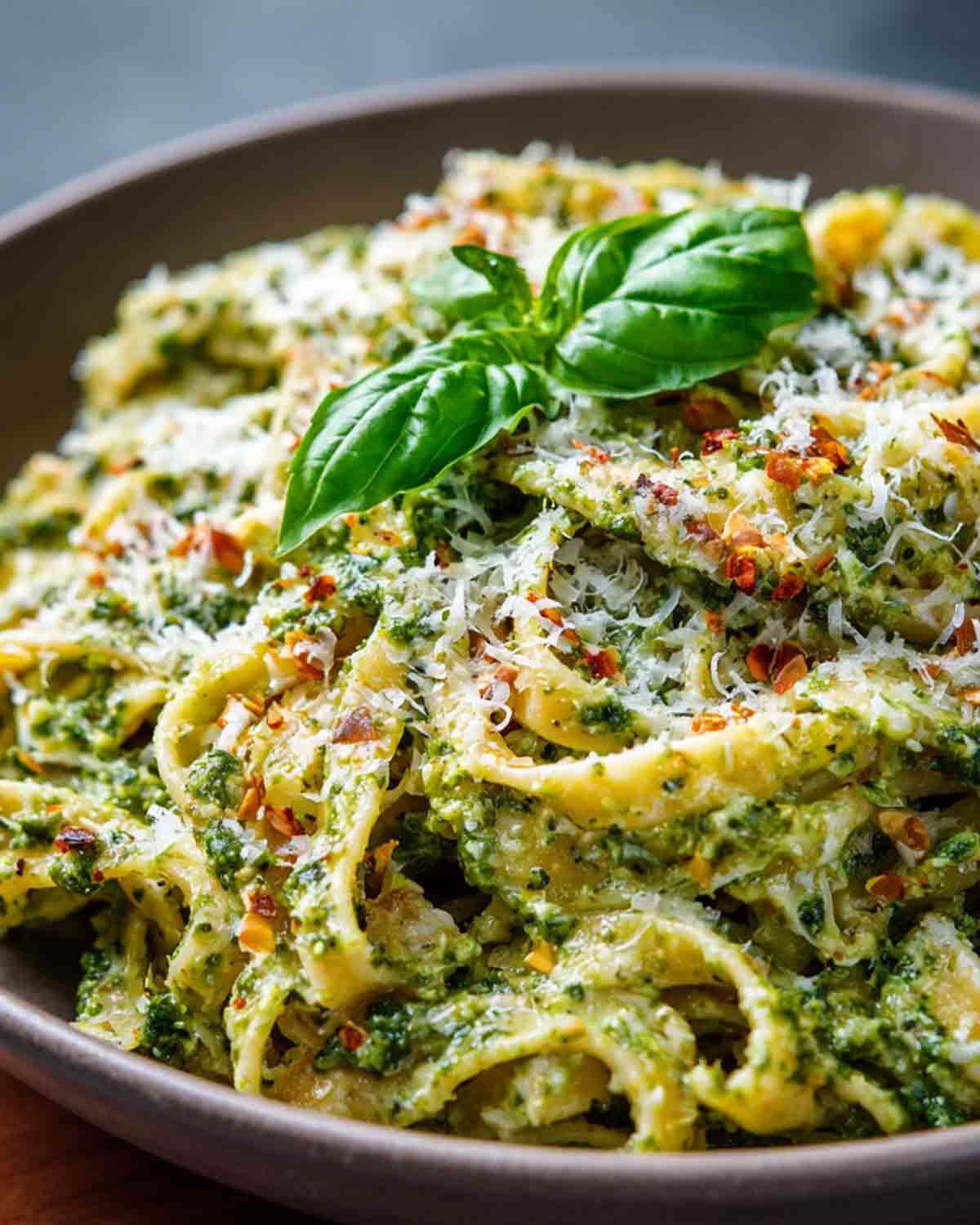

Creamy Pesto Pasta
Ingredients
Equipment
Method
- Bring a large pot of salted water to a boil. Cook the pasta according to package instructions until al dente. Reserve about ¼ cup of pasta water before draining.
- Heat olive oil in a large skillet over medium heat. Add minced garlic and sauté for about 30 seconds until fragrant.
- Pour the heavy cream into the skillet and stir gently. Allow it to simmer for 2–3 minutes so the sauce begins to thicken slightly.
- Stir the basil pesto into the cream sauce. Mix well until the sauce turns smooth and evenly green.
- Add the cooked pasta to the skillet and toss until well coated. If the sauce seems too thick, add a splash of reserved pasta water to loosen it.
- Add grated parmesan cheese, salt, black pepper, and red pepper flakes if desired. Stir until the cheese melts and the sauce becomes creamy.
- Garnish with fresh basil and extra parmesan cheese before serving.
Nutrition
Notes
- Do not overheat pesto, as high heat can dull the fresh basil flavor.
- Use freshly grated parmesan for the best texture and taste.
- If the sauce becomes too thick, add a small amount of pasta water to restore creaminess.
- You can easily add grilled chicken, shrimp, mushrooms, or spinach to turn this into a heartier meal.
Tried this recipe?
Let us know how it was!
Creamy pesto pasta is the perfect example of how simple ingredients can come together to create a dish that feels both comforting and elegant.
The fresh herbal flavor of basil pesto combined with a smooth, creamy sauce creates a pasta dish that is rich without being overwhelming. With just a few pantry staples and fresh ingredients, you can prepare a meal that tastes like it came straight from an Italian restaurant.
Another reason this dish is so popular is its flexibility. You can keep it simple with just pasta and sauce or customize it with proteins, vegetables, and different pasta shapes.
Once you master the basic technique, creamy pesto pasta becomes a reliable recipe you can turn to anytime you want a quick, flavorful, and satisfying dinner.