The Best Vegan Pesto
If you’ve ever fallen in love with the bold, herby flavor of classic pesto, you’re going to adore this vegan pesto version just as much—maybe even more. This vibrant green sauce captures everything you love about traditional pesto while keeping things completely dairy-free and plant-based.
Classic pesto from Italy is typically made with Parmesan cheese, pine nuts, garlic, olive oil, and fresh basil. But here’s the good news: you don’t need cheese to achieve that rich, savory depth. With a few simple swaps, you can create a creamy, flavorful vegan basil pesto that’s just as satisfying.
Instead of Parmesan, this recipe uses nutritional yeast to deliver that signature cheesy, umami taste. Combined with fresh herbs and heart-healthy olive oil, it creates a smooth, aromatic sauce that works beautifully in a variety of dishes. Plus, basil itself offers impressive nutritional value—if you’re curious, here are some great insights on the health benefits of basil and why it’s such a powerful ingredient.
Even better, this dairy-free pesto sauce is incredibly versatile. Toss it with pasta, spread it on sandwiches, drizzle it over roasted vegetables, or use it as a dip—you’ll find yourself reaching for it again and again.
What Is Vegan Pesto? (And How It Differs from Traditional Pesto)
Vegan pesto is a plant-based version of the classic Italian sauce known as pesto alla Genovese, which originates from the Liguria region. Traditional pesto relies heavily on Parmesan cheese to create its signature richness and depth of flavor.
In a vegan pesto recipe, the cheese is replaced with ingredients that mimic its savory, slightly nutty profile. The most common substitute is nutritional yeast—a staple in many plant-based kitchens. If you’re new to it, here’s a helpful guide explaining what is nutritional yeast and its benefits.
The result is a sauce that’s still:
- Bright and herbaceous
- Rich and slightly nutty
- Perfectly balanced with garlic and olive oil
What makes vegan pesto so appealing is that it retains all the bold flavors of the original while being completely dairy-free, making it ideal for vegan, vegetarian, or lactose-free diets.
Why You’ll Love This Vegan Pesto Recipe
There are so many reasons this easy vegan pesto recipe deserves a permanent place in your kitchen.
First, it’s incredibly quick to make. You can blend everything together in under 10 minutes, making it perfect for busy weeknights or last-minute meals.
Second, it’s a healthier alternative to many store-bought sauces. Made with fresh basil, garlic, nuts, and olive oil, this healthy pesto is packed with nutrients, antioxidants, and healthy fats.
It’s also very flexible. You can swap ingredients based on what you have on hand—use walnuts instead of pine nuts, or even make it nut-free with seeds.
Pro Tip: Let your pesto sit for about 10–15 minutes before serving. This allows the flavors to meld together, resulting in a deeper, more balanced taste.
Finally, the flavor is simply irresistible. It’s fresh, garlicky, slightly cheesy, and wonderfully aromatic—everything you want in a homemade pesto sauce.
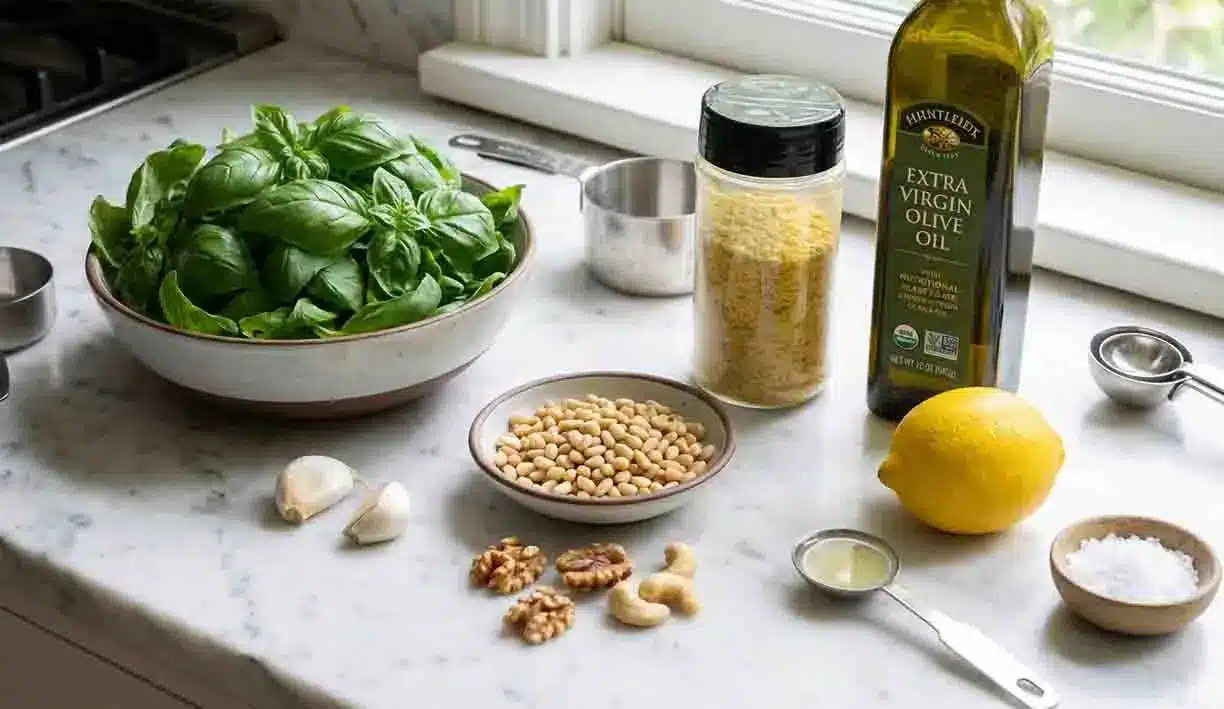
Ingredients for the Best Vegan Pesto
The beauty of this vegan pesto recipe lies in its simplicity. With just a handful of fresh, wholesome ingredients, you can create a sauce that tastes gourmet.
Core Ingredients
- Fresh basil leaves – The star of the show, providing that classic herbal flavor
- Garlic – Adds depth and a bold, savory kick
- Nuts – Pine nuts are traditional, but walnuts, almonds, or cashews work beautifully
- Extra virgin olive oil – Creates a smooth, rich texture
- Nutritional yeast – Brings that cheesy, umami flavor without dairy
Optional Add-Ins
- Lemon juice – Brightens the flavor and balances richness
- Spinach or arugula – Great for stretching the pesto or adding variation
- Sunflower seeds – A perfect nut-free alternative
Tip: Always use fresh, vibrant green basil for the best flavor and color. If your basil is wilted or bruised, your pesto won’t have that same fresh, aromatic quality.
How to Make Vegan Pesto (Step-by-Step)
Making homemade vegan pesto couldn’t be easier. All you need is a food processor or blender and a few minutes of prep.
Step 1: Prepare Your Ingredients
Wash and thoroughly dry your basil leaves. If you have time, lightly toast your nuts in a dry pan for a few minutes—this enhances their flavor and gives your pesto a richer taste.
Step 2: Blend the Base
Add the basil, garlic, nuts, and nutritional yeast to your food processor. Pulse a few times to break everything down.
Step 3: Add Olive Oil Gradually
With the processor running, slowly drizzle in the olive oil. This helps emulsify the sauce and creates that smooth, cohesive texture. You can adjust the amount depending on whether you prefer a thick or more pourable pesto.
Step 4: Taste and Adjust
Add salt, a squeeze of lemon juice, or extra garlic to taste. This step is key to getting the perfect balance of flavors.
Pro Tip: Avoid over-blending your pesto. A slightly textured consistency gives it a more authentic, rustic feel and prevents it from becoming too oily.
Tips for Perfect Vegan Basil Pesto Every Time
To make sure your vegan pesto turns out perfect every time, keep these simple tips in mind:
- Use high-quality extra virgin olive oil for the best flavor
- Don’t over-process—texture matters
- Add a splash of water if the pesto feels too thick
- Taste as you go and adjust seasoning
Bold Tip: To keep your pesto bright green and fresh, store it with a thin layer of olive oil on top. This helps prevent oxidation and preserves both color and flavor.
Delicious Vegan Pesto Variations to Try
One of the best things about vegan pesto is how easy it is to customize. Once you master the base recipe, you can create endless variations depending on your taste, budget, or what’s in your kitchen.
Vegan Spinach Pesto
If you want a milder and more budget-friendly option, swap half (or all) of the basil with fresh spinach. It still delivers a beautiful green color while being less intense and more affordable.
Kale Pesto
Kale pesto is a nutrient powerhouse. It has a slightly earthy flavor and pairs especially well with hearty dishes like roasted vegetables or grain bowls.
Sun-Dried Tomato Pesto
Looking for something bold and tangy? This red pesto variation uses sun-dried tomatoes instead of basil for a rich, slightly sweet, and savory sauce.
Nut-Free Vegan Pesto
If you have a nut allergy or want a lighter version, use sunflower seeds or pumpkin seeds. They provide a similar texture without compromising flavor.
Creamy Avocado Pesto
For a modern twist (popular on Pinterest and TikTok), blend in ripe avocado. It creates an ultra-creamy pesto that’s perfect for spreading on toast or wraps.
Pro Tip: Don’t be afraid to mix herbs—basil, parsley, and cilantro together can create a unique and refreshing flavor profile.
How to Use Vegan Pesto (Serving Ideas)
Vegan pesto is incredibly versatile, which is why it’s a staple in many kitchens. Here are some delicious ways to use it:
- Toss with pasta for a quick vegan pesto pasta
- Spread on sandwiches, wraps, or toast
- Drizzle over roasted vegetables or grilled tofu
- Use as a pizza base instead of tomato sauce
- Stir into salads, grain bowls, or quinoa dishes
If you love pesto-based dishes, you might also enjoy recipes like
Creamy Pesto Pasta or try something creative like
Chicken Crepe Wraps (easily adaptable to a plant-based version).
For lighter meals, pesto pairs beautifully with fresh salads like
Cornbread Salad Recipe.
How to Store Vegan Pesto (Fridge & Freezer Tips)
Proper storage is key to keeping your vegan pesto fresh and vibrant.
In the refrigerator, store pesto in an airtight container for up to 4–5 days. To prevent it from turning brown, pour a thin layer of olive oil on top before sealing.
For longer storage, freezing works beautifully. Spoon pesto into ice cube trays, freeze until solid, then transfer to a freezer-safe bag. This way, you can thaw small portions whenever needed.
If you’re working with fresh herbs often, learning how to store fresh herbs properly can make a big difference in preserving flavor and reducing waste.
Tip: Always thaw pesto in the fridge or at room temperature—avoid microwaving to preserve its texture.
Is Vegan Pesto Healthy? Nutrition & Benefits
Vegan pesto isn’t just delicious—it’s also packed with nutrients.
Basil is rich in antioxidants and vitamin K, while olive oil provides heart-healthy fats. Nutritional yeast adds B vitamins and contributes to the sauce’s savory depth.
Because it’s made with whole, plant-based ingredients, vegan pesto is a great addition to a balanced diet. That said, it is calorie-dense due to the oil and nuts, so moderation is key.
Overall, it’s a flavorful way to add both nutrition and excitement to everyday meals.
Common Mistakes to Avoid When Making Vegan Pesto
Even though vegan pesto is simple, a few common mistakes can affect the final result:
- Using wilted or dark basil leaves (affects flavor and color)
- Adding too much garlic, which can overpower everything
- Over-blending, resulting in a greasy texture
- Skipping acidity (like lemon juice), which balances the richness
Quick Fix: If your pesto tastes flat, a squeeze of lemon juice or a pinch of salt can instantly brighten it.
More Delicious Vegan Dressings to Try
If you love this vegan pesto, there are plenty of other flavorful, plant-based dressings you can explore to keep your meals exciting and разнообраз. Creamy vegan dressings are especially popular because they recreate classic flavors without dairy, often using ingredients like nuts, tahini, or nutritional yeast to achieve that rich texture .
For a bold and tangy option, try this Vegan Caesar Dressing, which delivers that classic garlicky, savory flavor without any cheese or anchovies.
If you’re looking for something fresh and herb-packed, the Vegan Green Goddess Dressing is a vibrant choice loaded with herbs and perfect for salads or dips.
And for a slightly sweet, zesty twist, don’t miss the Carrot Ginger Dressing, a bright and refreshing sauce that pairs beautifully with grain bowls and crunchy salads.
Pro Tip: Rotate different dressings throughout the week to keep your meals interesting while adding a variety of nutrients and flavors to your diet.
FAQs About Vegan Pesto
Is pesto vegan?
Traditional pesto is not vegan because it contains Parmesan cheese. However, vegan pesto replaces cheese with nutritional yeast or nuts.
What can I use instead of Parmesan in pesto?
Nutritional yeast is the most popular option. You can also use cashews or almonds for a creamy, cheesy flavor.
Can I make pesto without nuts?
Yes! Seeds like sunflower or pumpkin seeds are excellent substitutes, or you can skip them entirely for a lighter version.
How long does vegan pesto last in the fridge?
It typically lasts 4–5 days when stored properly in an airtight container.
Can you freeze vegan pesto?
Absolutely. Freezing pesto in small portions makes it easy to use later without waste.
Why does pesto turn brown?
Pesto oxidizes when exposed to air. Adding a thin layer of olive oil on top helps prevent this.

The Best Vegan Pesto
Ingredients
Equipment
Method
- Wash and thoroughly dry the basil leaves. Peel the garlic and measure all ingredients.
- Add basil, garlic, nuts, and nutritional yeast to a food processor. Pulse until roughly chopped.
- With the processor running, slowly drizzle in olive oil until the mixture becomes smooth and creamy.
- Add lemon juice and salt to taste. Blend briefly to combine.
- Use immediately or transfer to an airtight container for later use.
- Pro Tip: For the best texture, avoid over-blending—slightly coarse pesto tastes more authentic and flavorful.
Nutrition
Notes
- You can substitute pine nuts with walnuts, almonds, or sunflower seeds for a budget-friendly option.
- Add spinach or kale for a milder, nutrient-rich variation.
- Store with a thin layer of olive oil on top to keep the pesto fresh and green.
- Let the pesto rest for 10 minutes before serving to enhance flavor.
Tried this recipe?
Let us know how it was!Vegan pesto is one of those simple recipes that delivers big results. It’s fresh, flavorful, incredibly versatile, and easy to make in minutes.
Whether you’re tossing it with pasta, spreading it on toast, or experimenting with creative variations, this plant-based pesto proves that you don’t need dairy to enjoy a rich, satisfying sauce.
Once you try it, don’t be surprised if it becomes a regular staple in your kitchen.